


The artist has donated the full amount of his £25,000 award prize money to the trust for venues, which operates to protect the United Kingdom's grassroots live music spots.
He was presented with the cheque on mid-October as his latest record the album was named the best record of the last 12 months.
He has decided to donate the funds to the Music Venues Trust, in appreciation of the vital role small stages fulfilled in his beginning days.
"I wouldn't be doing what I am doing today if it wasn't for all the gigs I played around the region, and further afield, when I was starting out," stated Fender. "These locations are iconic, but they are in difficulty."
Since the start of 2023, more than 150 of these spaces have permanently closed – about 16% of the entire UK sector.
In the last year, well-known musicians like Pulp, Coldplay, Katy Perry and Sheeran have all supported the trust in its efforts to support the industry, by including a minor surcharge to their ticket prices, which goes to help independent venues.
Fender also took part, generating in excess of £100,000 on his recent tour to help numerous local spots across England, Scotland, and Wales.
These funds supported locations that were facing potential shutdown due to issues caused by floods, fires and bereavements, as well as licensing issues, conflicts and noise complaints.
Other venues received monetary aid in improving infrastructure and sound and lighting systems that helped musicians and concertgoers.
"The idea that revenue from performances in major spaces helps the smaller venues, where it begins for artists like me, is just sensible," Sam Fender has said.
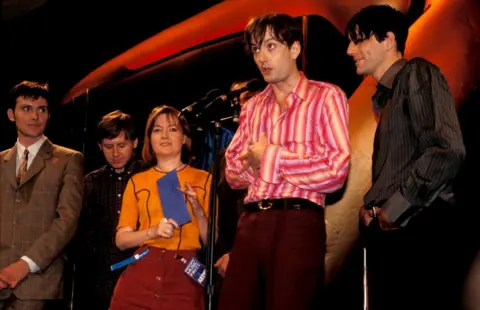
The musician is not the first artist to contribute his award prize money to charitable organizations.
In they earned the trophy in 1996 for their release the album, lead singer Jarvis Cocker stated that the band would give their winnings to the non-profit the charity.
During 2002, musician Ms Dynamite shared her award among several organizations, like the children's charity and a Sickle Cell organization.
"I also contributed a grand to my local community centre, to their gymnastics class, because I did gymnastics when I was growing up and they required updated gear," the artist explained to outlets.
In recent years, the band contributed their prize money to the local youth club that supported their act, in addition to other grassroots music organisations.
And 1994 winners they donated their award to a charity for MS after a friend was diagnosed the illness.
"Receiving the award was sufficient," said artist Heather Small. "The prize was the extra but we could do without the cherry, because we had the honor. So our winning affected another person's life."
Recently, the trust shared it had saved two small stages in the South East, by transferring them to public stewardship.
The Joiners in that area and the second in that location were acquired under the community ownership program, which is funded by the arts council and supporters who buy "shares" in the properties.


